

Refrigerant image source: (https://www.astersonline.com/products/r32-refrigerant-cylinder-10kg)
R410A and R404A have been the industry-standard refrigerants for decades, powering everything from residential air conditioners to commercial refrigeration systems. Today, environmental regulations are driving a major shift in the HVAC industry. Because of their high Global Warming Potential (GWP), both R410A and R404A are being phased out globally, prompting manufacturers, contractors, and homeowners to prepare for the next generation of refrigerants, including the new R32 refrigerant.
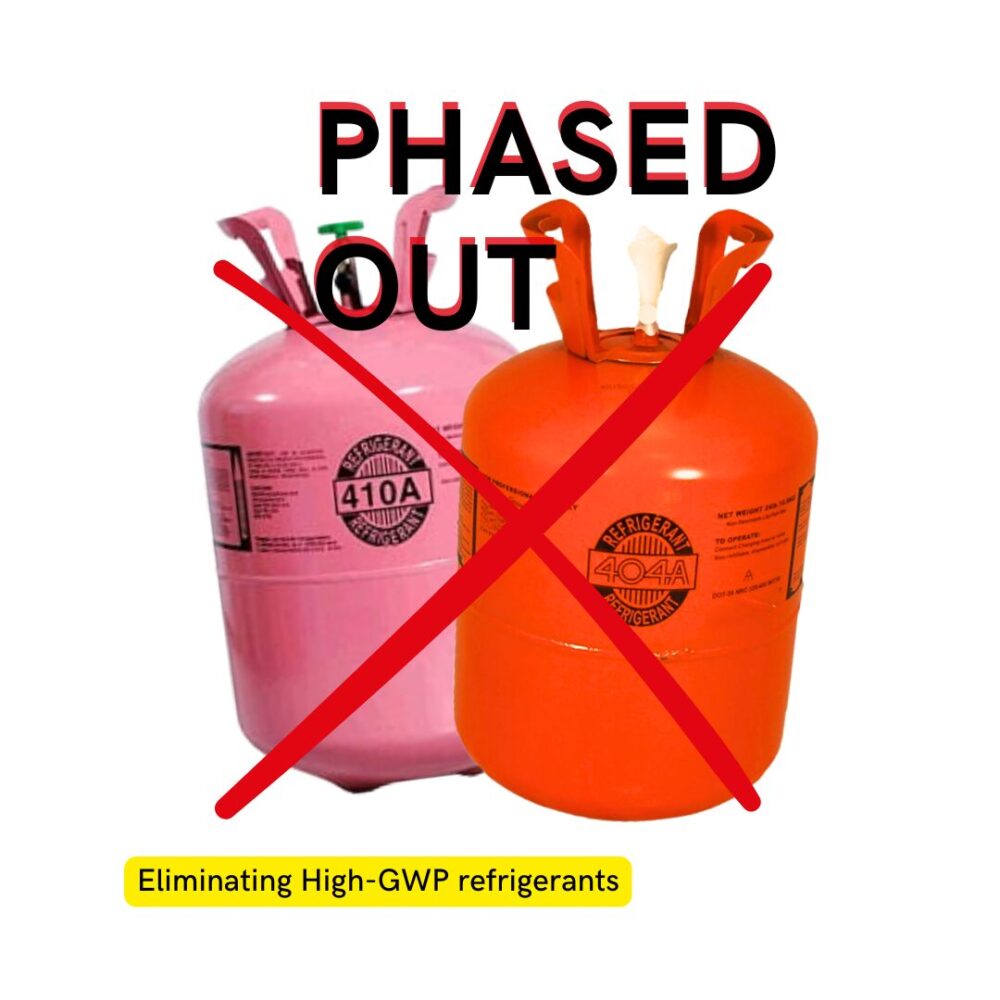
Why Are R410A and R404A Being Phased Out? Understanding Global Warming Potential
Both R410A and R404A are hydrofluorocarbons (HCFs) that do not damage the ozone layer. The concern lies in their climate impact—specifically, their high Global Warming Potential (GWP).
But what is GWP (Global Warming Potential)?
GWP is a relative measurement that compares how much heat a gas can trap in the atmosphere compared to carbon dioxide (CO2), which serves as the baseline with a GWP of 1. By comparison:
- R410A has a GWP of 2,088
- R404A has a GWP of 3,922
- CO2 has a GWP of 1
These elevated GWP values explain why R410A and R404A are being targeted by environmental regulations and phased out in favor of lower-impact alternatives.
Who Decided to Phase Out These Refrigerants? Global and U.S. Regulations Explained
These regulations were not set by HVAC manufacturers, but are part of a coordinated global effort to reduce the environmental impact of high-GWP refrigerants. The transition is led internationally by the Kigali Amendment to the Montreal Protocol, an agreement adopted in 2016 and signed by more than 150 countries worldwide.
In the United States, the Kigali Amendment is enforced through the American Innovation and Manufacturing (AIM) Act of 2020, which grants the Environmental Protection Agency (EPA) the authority to phase down hydrofluorocarbons like R410A and R404A.
The shared global goal of these regulations is to reduce the rise in global temperatures by up to 0.5 degrees Celsius by the year 2100. Beyond environmental benefits, these policies are also driving innovation in HVAC technology, leading to more efficient systems and lower-impact refrigerants that benefit homeowners, businesses, and the planet alike.
R410A and R404A Phase-Out Timeline: What’s Happening and When
The phase-out of high-GWP refrigerants is already well underway, and the timelines differ depending on the type of system.
R404A, commonly used in commercial refrigeration such as supermarkets and walk-in freezers, has been subject to the most aggressive restrictions. In many regions, the use of R404A in new commercial equipment has been prohibited since as early as 2020, with further restrictions in the United States by 2024. While existing systems using R404A can still be legally serviced, newly manufactured (“virgin”) R404A had become increasingly scarce, making reclaimed refrigerant the primary option for maintenance.
For residential and light commercial air conditioning, R410A is now entering its own transition period. As of January 1, 2025, manufacturers can no longer produce or import most new HVAC systems that use R410A. By January 1, 2026, new installations of R410A systems were largely prohibited. Importantly, homeowners are not required to replace working R410A units—existing systems can continue to be serviced for years to come. However, as production limits tighten, the cost and availability of R410A will gradually increase, making long-term planning more important.
This staggered timeline helps explain why the shift to newer refrigerants like R32 is happening now and reassures homeowners that they still have time to make informed decisions about repairs or upgrades.
What’s Replacing R410A and R404A? Meet the Next Generation of Refrigerants
As high-GWP refrigerants like R410A and R404A are phased out, the HVAC industry is transitioning to lower-impact alternatives designed to meet new environmental standards. One of the most widely adopted replacements is the new R32 refrigerant, which is already being used in many next-generation residential and commercial systems.
In addition to R32, some manufacturers are adopting R454B, while commercial refrigeration systems previously using R404A are transitioning to options such as R448A or R449A. In certain applications, natural refrigerants like carbon dioxide (CO₂) and propane are also being used.
What these newer refrigerants have in common is a significantly lower Global Warming Potential, making them more environmentally responsible. Many are classified as A2L refrigerants, meaning they are mildly flammable and require updated safety features. Because of this, they are designed specifically for new equipment and cannot be used in older systems built for R410A or R404A.
Rather than creating limitations, this shift represents progress—new systems built for refrigerants like R32 are more efficient, compliant with future regulations, and better aligned with long-term sustainability goals.
Common Questions Homeowners and Businesses Have About the Refrigerant Transition
Over time, yes. As production of R410A and R404A continues to decline, refrigerant prices are expected to rise. Reclaimed refrigerants will become more common for servicing older systems, which can also increase maintenance costs.
Yes. If your system is operating properly, there is no requirement to replace it immediately. Existing R410A systems can still be serviced legally for years. However, long-term repair costs may eventually outweigh the cost of upgrading.
No. New refrigerants like R32 and R454B are not compatible with older systems due to differences in pressure, system design, lubricants, and safety requirements.
Yes. Systems designed for newer refrigerants typically offer better head transfer, improved energy efficiency, and a lower environmental impact compared to older models.
This transition can feel overwhelming, but understanding the options helps homeowners and businesses make informed, cost-effective decisions.
Conclusion – What Should You Do Next?
While R410A and R404A are still available today, their long-term future is limited. As supply tightens, costs will continue to rise, making reactive repairs more expensive over time. New systems designed for lower-GWP refrigerants offer improved efficiency, regulatory compliance, and peace of mind.
For homeowners and businesses, the key is planning—not panic. Whether that means maintaining an existing system or proactively upgrading to newer technology, understanding the transition allows you to make the choice that best fits your needs and budget.
While R410A isn’t disappearing overnight, the future of air conditioning is already here—and it’s built around lower-impact refrigerants like R32.


Leave a Reply
You must be logged in to post a comment.